
Fragrance advertising is one of the most demanding disciplines in commercial photography because it requires translating invisible scents into visceral visual stories. A successful perfume visual does not merely display a flacon; it evokes mood, temperature, raw ingredients, and texture in a single frame.
With advanced generative image tools and specialized fragrance AI prompts, art directors and brand creators can rapidly explore editorial concepts that once required days of physical staging, liquid rigs, and complex compositing. Here is a breakdown of top visual concepts and prompt techniques for commercial fragrance campaigns.
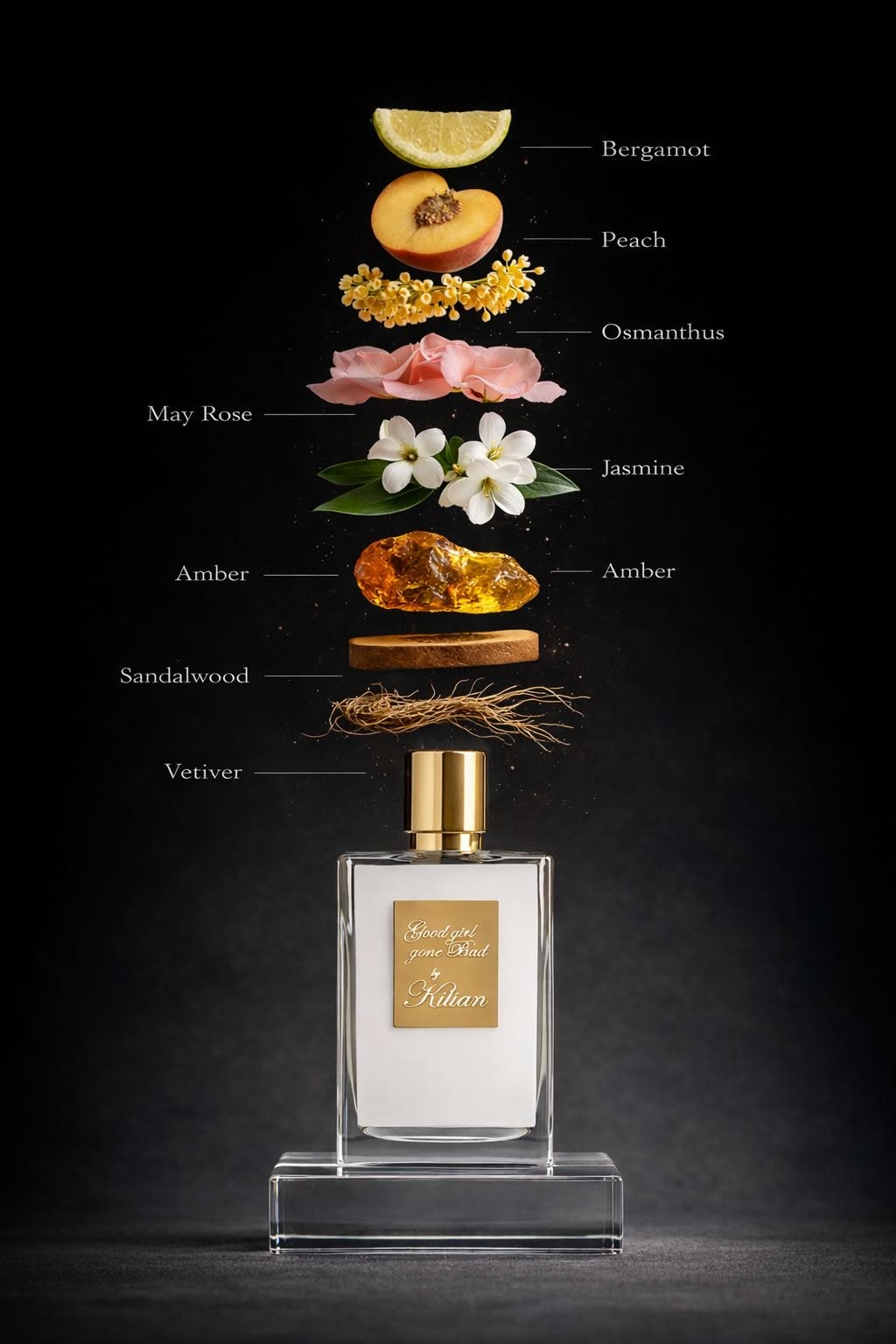
1. Deconstructed Scent Pyramids with Levitating Ingredient Stacks
One of the most effective storytelling devices in modern fragrance marketing is the visual deconstruction of top, heart, and base notes. Arranging raw botanicals in a vertical, floating column directly behind or beside the flacon instantly communicates the olfactory journey to the viewer.
When drafting prompts for this style, specify a dark or minimalist backdrop to ensure high contrast between delicate petals, resins, and glass textures. Keeping the lighting focused on the vertical axis gives the composition an architectural, high-end gallery aesthetic suitable for hero banners and print campaigns.
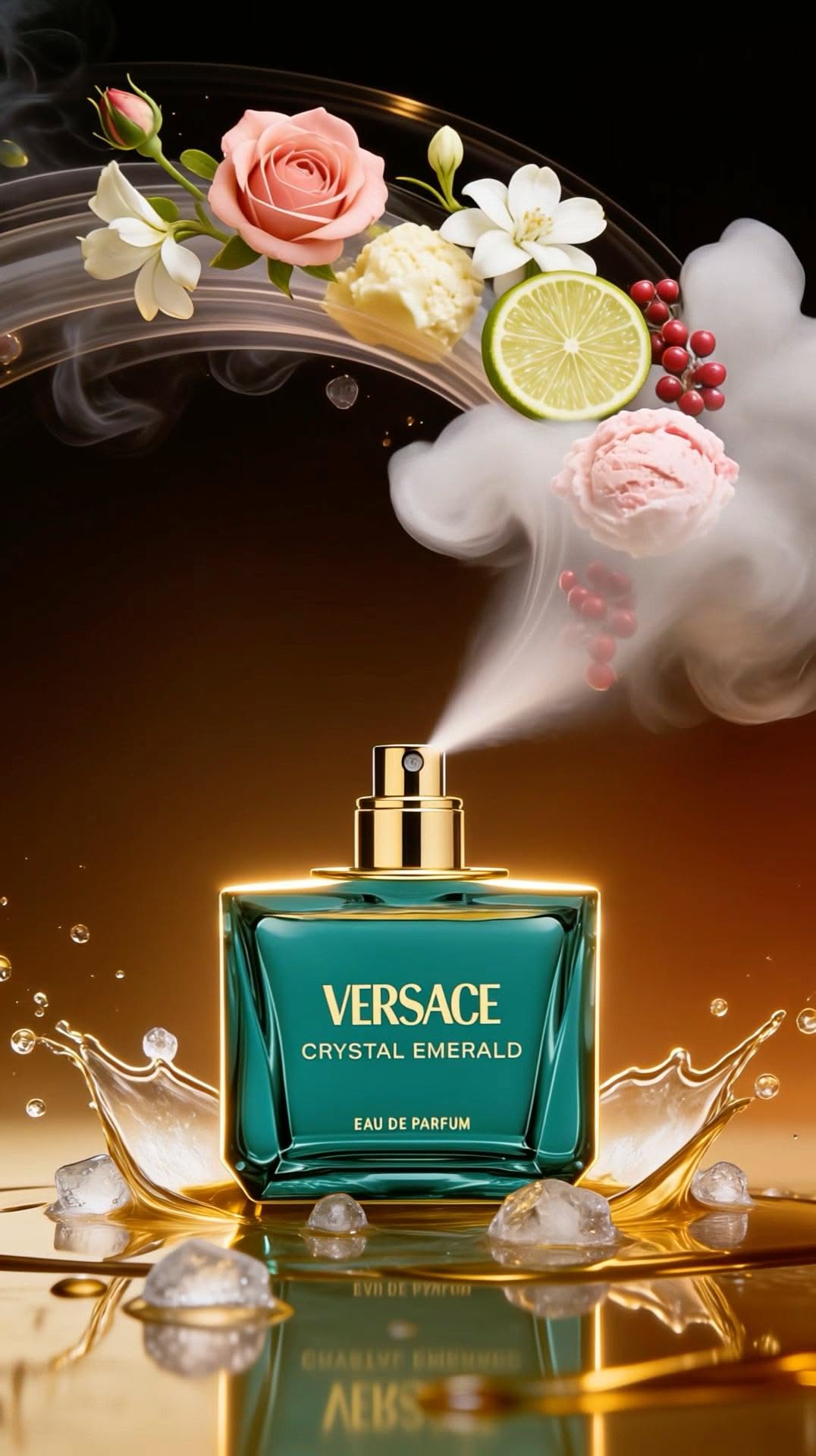
2. Dynamic Liquid Collisions and Mist Environments
Capturing crisp fluid dynamics conveys immediate freshness, vitality, and cooling undertones. Liquid splashes paired with fine vapor mist work especially well for aquatic, citrus, or aromatic green perfume profiles.
To achieve this look with generative tools, frame the prompt around high-speed studio flash techniques, micro-droplets, and contrasting fluid colors. Positioning an emerald or jewel-toned flacon amidst golden liquid or crystalline water creates high-contrast luxury appeal without visual clutter.
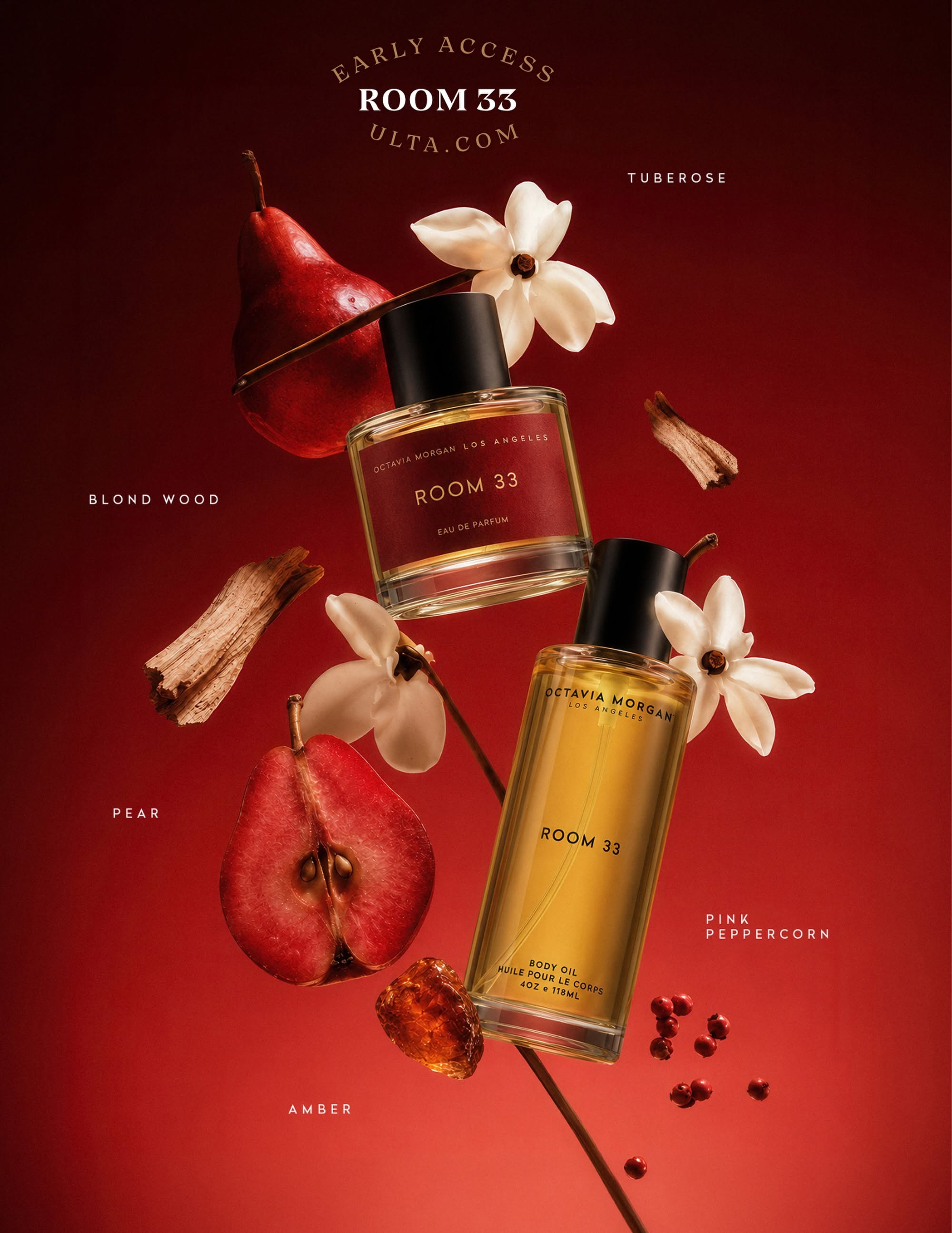
3. Harmonized Multi-Product Duos in Suspended Motion
Beauty and lifestyle brands often launch matching scent lines, pairing an eau de parfum with an elixir, dry body oil, or travel atomizer. Creating a cohesive two-bottle still life requires balanced weight, complementary lighting, and unified ingredient staging.
Framing both vessels in mid-air suspension surrounded by key botanical notes—such as amber facets, ripe fruit, or delicate petals—gives the visual a weightless, premium feel. Rich monochromatic backdrops, like crimson or deep navy, help anchor the floating items into a cohesive luxury campaign asset.
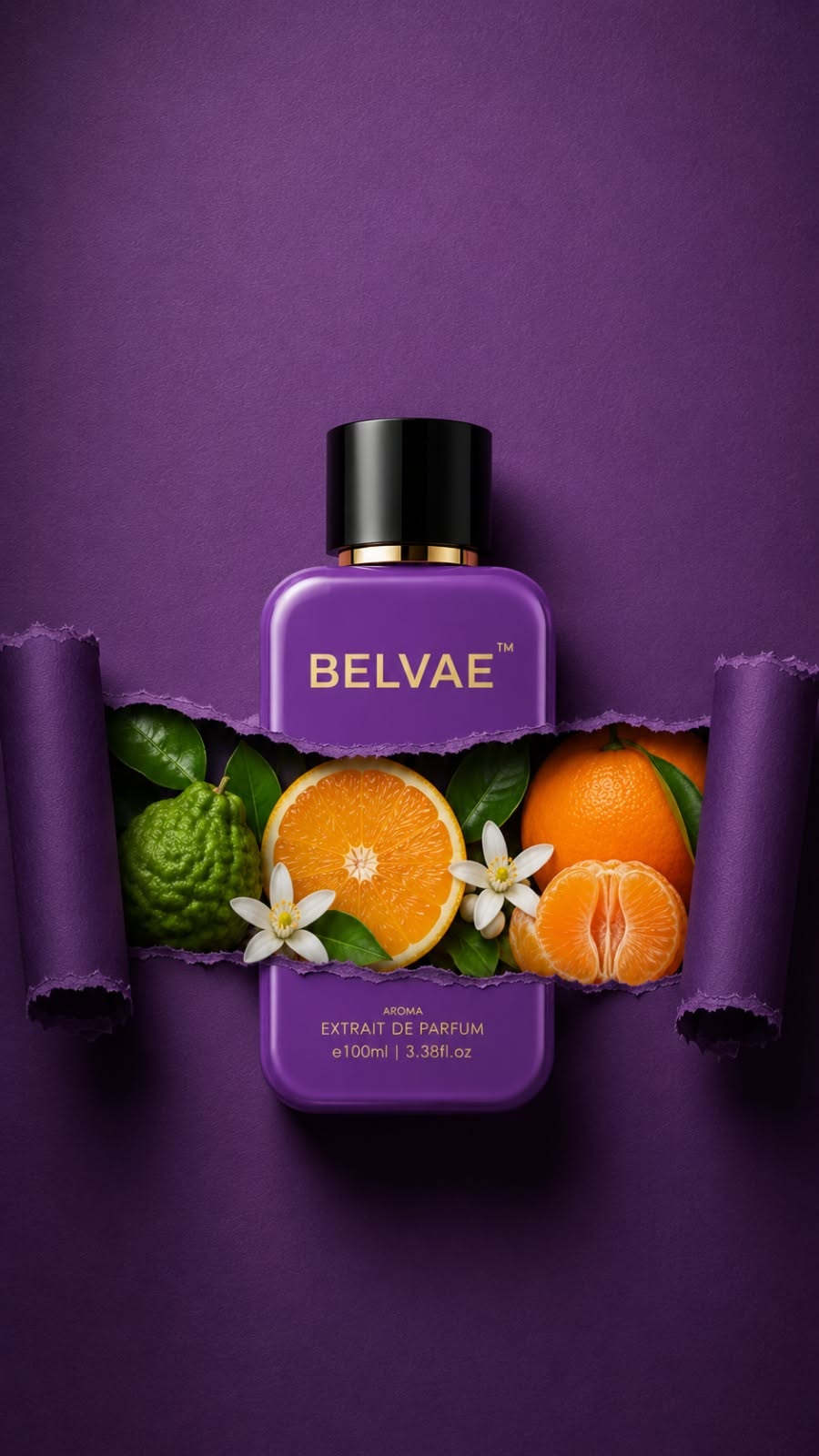
4. Editorial Cutouts and Multi-Layered Reveal Techniques
For modern, design-forward brands, playful editorial layouts offer a sharp alternative to traditional tabletop photography. Incorporating physical motifs like torn-paper edges, layered silhouettes, or graphic framing creates depth and draws immediate attention to the scent's vibrant ingredients.
Prompts that combine contrasting color palettes—such as royal purple and bright citrus yellow—with clean studio backdrops produce striking thumb-stopping imagery for social media ads and digital storefronts.
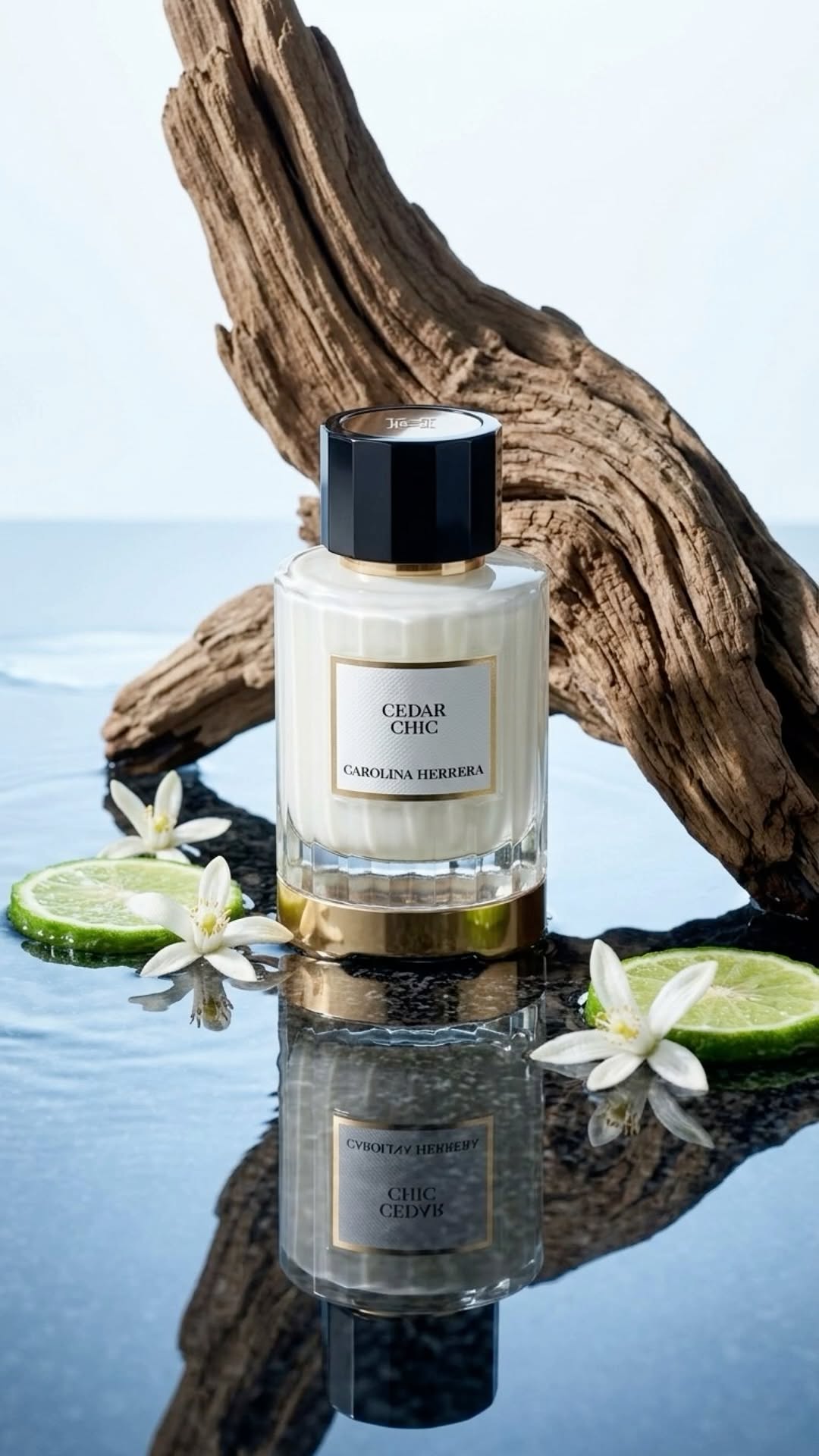
5. Organic Tactility with Driftwood, Water, and Fluted Glass
Earthy, woody, and mineral fragrances benefit from raw organic props such as weathered driftwood, stone, and shallow reflection pools. The interplay between sharp, faceted glass flacons and rough, weathered textures emphasizes craftsmanship and natural sourcing.
When prompting reflective water surfaces, balance wet foreground elements with soft studio gradients. This grounds the product naturally while allowing translucent glass textures and citrus accents to catch soft highlights.
6. Monochromatic Botanical Immersion
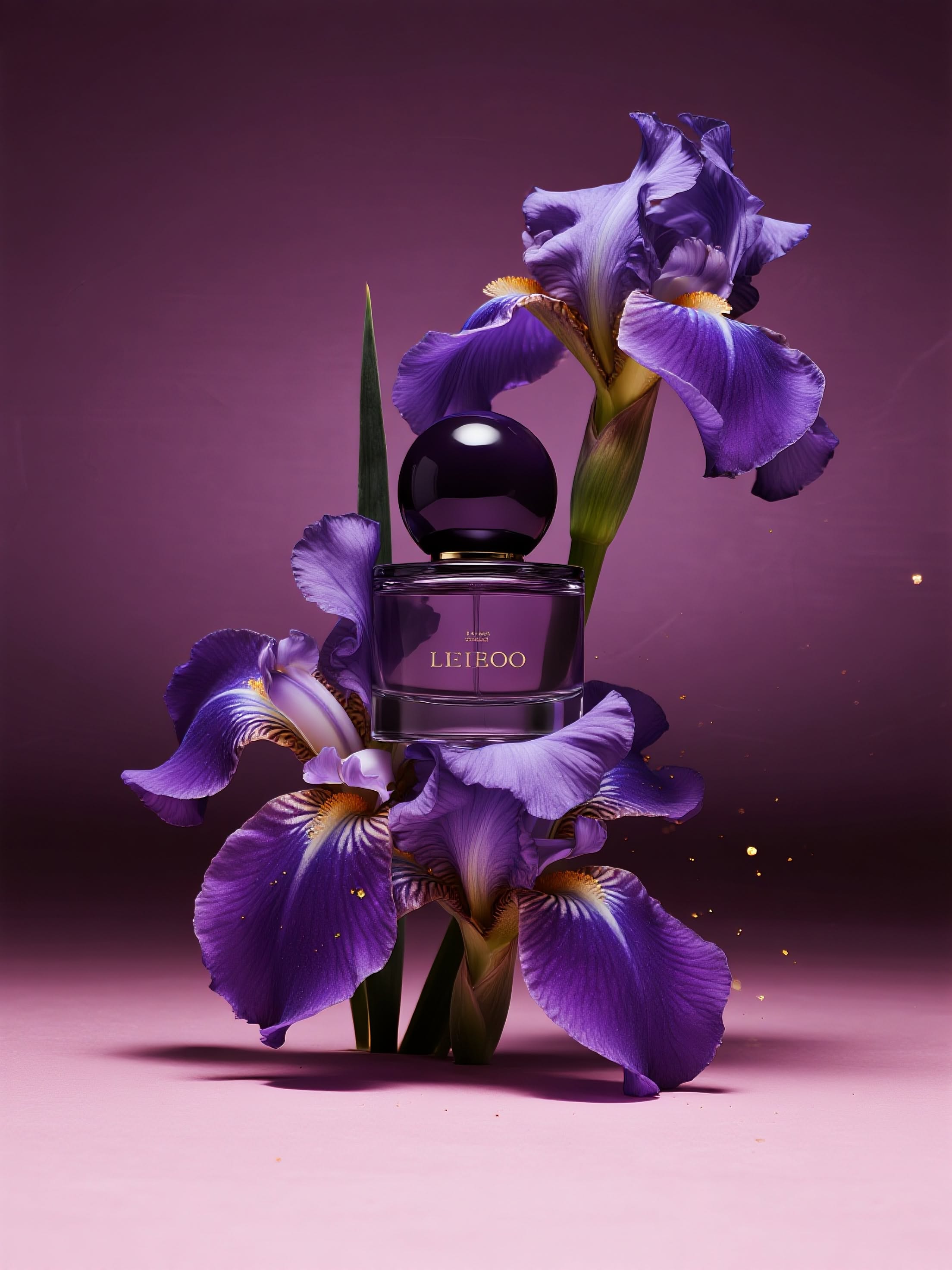
Submerging a fragrance bottle directly into a lush bed of single-origin botanicals immediately signals a signature soliflore note. This approach creates an immersive sensory environment where petals and glass harmonize under uniform color grading.
Using monochromatic palettes—such as deep violet petals around matching translucent purple glass—creates a dramatic, high-fashion mood. Clearly defining soft rim lighting and shallow depth of field ensures the bottle remains the distinct focal point amidst dense floral detail.
Frequently asked questions
What makes a fragrance AI prompt produce realistic luxury results?
Realistic results depend on specifying tangible studio lighting setups (such as softbox rim lighting or macro flash), precise material properties (fluted crystal glass, translucent liquid, brushed metal caps), and organic prop interactions like shallow water reflections or botanical arrangements.
How can I represent specific fragrance notes visually in AI imagery?
Describe the exact raw ingredients you want staged around the flacon—such as crushed vanilla pods, torn citrus peel, vetiver roots, or iris petals—and define their placement, whether floating in a deconstructed stack, resting on reflective surfaces, or framed in foreground bokeh.
Can AI-generated fragrance visuals be used directly in commercial advertising?
Yes. Creative teams frequently use high-resolution generative outputs for digital hero banners, social media marketing, packaging mockups, and early campaign storyboards before final production runs.